Libros
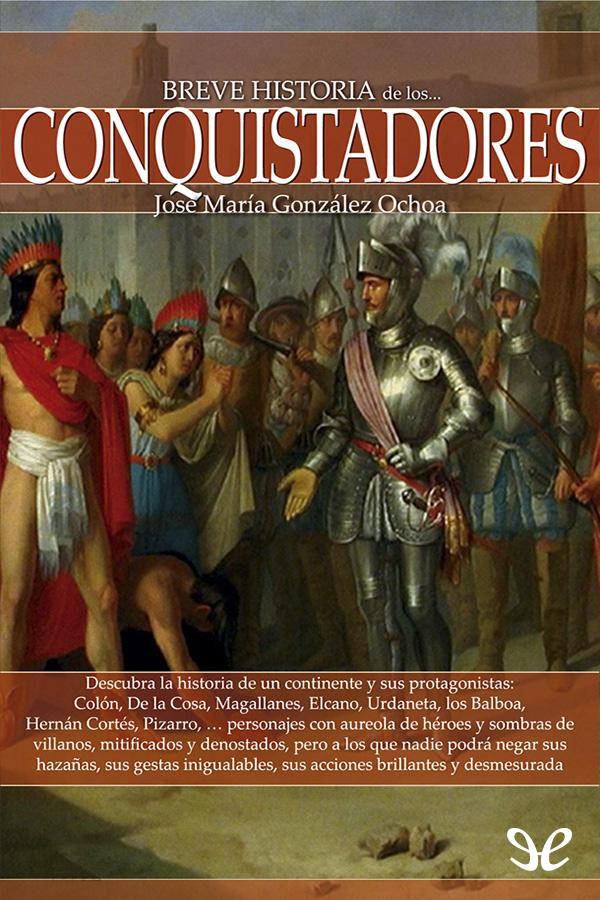
Breve historia de los conquistadores
A comprehensive historical examination of Christopher Columbus's life and voyages, tracing his journey from medieval Genoa through Portuguese and Spanish courts to the discovery of the New World.
Formatos disponibles
A comprehensive historical examination of Christopher Columbus's life and voyages, tracing his journey from medieval Genoa through Portuguese and Spanish courts to the discovery of the New World. The work distinguishes Columbus as a Renaissance figure embodying science and method rather than mere force, exploring the political, economic, and cultural circumstances that transformed his vision into the pivotal moment that would reshape global history.
- Idioma
- Español
This scholarly work presents a nuanced portrait of Christopher Columbus and his epoch-defining voyages, examining how an ambitious Genoese navigator became the architect of European expansion into the Americas. Through meticulous historical analysis, it contrasts Columbus with earlier Norse explorers like Leif Erikson, arguing that Columbus’s success derived not from superior courage but from scientific method, mathematical calculation, and strategic vision supported by navigation maps and classical texts.
The narrative traces Columbus’s formative years in the Mediterranean, his marriage into a family of experienced navigators, and his years of lobbying European courts—first Portugal, then Spain—to finance his westward expedition. Rather than presenting Columbus as a solitary genius, the work situates him within the broader ferment of late 15th-century Europe: the Spanish Reconquista’s completion, the rise of centralized monarchies, maritime competition with the Ottoman advance, and the accumulated cartographic knowledge of Iberian navigators and scholars.
The examination of his relationship with the Spanish crown reveals the complex interplay of royal ambition, court politics, and commercial calculation that finally secured support. The work illuminates how the Capitulations of Santa Fe established the terms that made Columbus both visionary and entrepreneur, granting him perpetual authority over his discoveries while the crown retained ultimate sovereignty.
Beyond the famous first voyage, the work traces three additional expeditions, chronicling Columbus’s exploration of the Caribbean islands, his touching of continental South America, and the colonial settlements that initiated Spain’s imperial dominion. Yet it also captures the tragedy of Columbus’s later years: his loss of prestige, administrative conflicts with colonists and the crown, and his futile legal battles for recognition.
- Título
- Breve historia de los conquistadores
- Idioma
- Español
Si te gustó Breve historia de los conquistadores, también...